


GLP-1 users are noticing changes in their hair. Several factors tied to rapid weight loss can play a role, and understanding them is the first step toward getting your hair back on track. Board-certified dermatologists, cosmetic surgeons and Mohs surgeons Drs. Joel and Daniel Schlessinger employ a comprehensive approach to determine what’s going on and how to treat it.
Does Ozempic cause hair loss, or is it every GLP-1?
GLP-1 medications have been around for decades, with the FDA first approving them for use with type 2 diabetes in 2005. However, they have become much more widespread and well-known in the last few years as they were approved for weight loss in non-diabetic patients.
You may know GLP-1s by their brand names like Ozempic, Wegovy, Mounjaro and Zepbound, or their active ingredients tirzepatide or semaglutide. Although hair loss was less commonly reported in diabetic patients, the recent increase in GLP-1 use for weight loss has changed the side effect profile.
“I think there is a tendency to think that starting a GLP-1 medication will improve all aspects of your health, but hair loss (among other things, such as loss of facial volume) is one of those things that affects a surprisingly large number of people a few months into the treatment,” explains Dr. Daniel Schlessinger. “It’s not exactly from the medication but rather from the metabolic stress and nutritional depletion that many GLP-1 users experience.”
How much and how quickly someone loses weight, rather than the specific drug, seems to drive excessive hair shedding. Doses used in diabetic patients tend to produce less dramatic weight loss, so hair loss is often less severe.
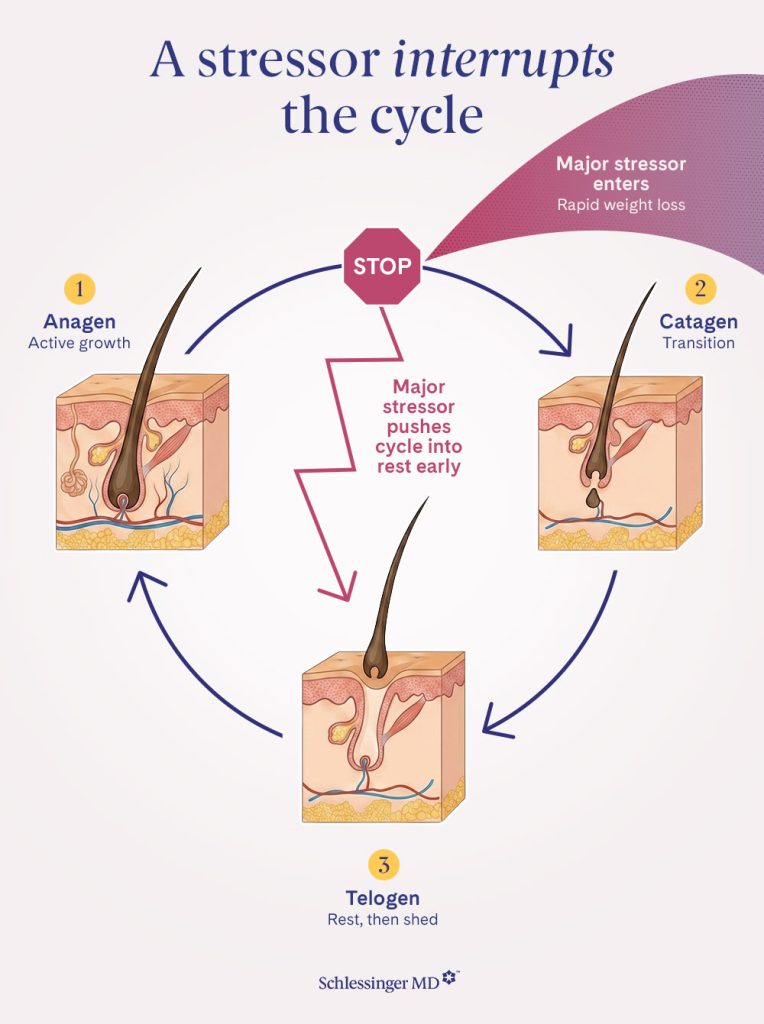
“Any kind of shock to the body, ranging from childbirth to a significant illness, traumatic event or COVID infection, can trigger a form of hair loss called telogen effluvium. Significant, rapid weight loss can have the same effect, pushing your hair’s growth cycle from the anagen (active growth) phase to the telogen (resting) phase. This happens about three to six months after the stressor,” says Dr. Joel Schlessinger.
Do I have GLP-1 hair loss or something else?
Hair loss can be especially tricky to diagnose, and sometimes, patients may experience multiple forms at once. While hair shedding related to rapid weight loss is a known side effect, other factors may be contributing, which is why it’s important you see a board-certified dermatologist before assuming.
“If you are having significant hair loss, you probably need to see a board-certified dermatologist. We thoroughly evaluate each patient, examine the scalp and go over a set of questions that guide us to a likely answer. Then, we can consider treatment options tailored to your unique needs and the diagnosis we feel you have based on our examination and assessment,” says Dr. Joel Schlessinger.
Diagnosing any kind of hair loss can involve blood tests and a hair or scalp sample that reveals more about underlying hair health. While GLP-1 medications are a likely cause in many cases, it’s essential to look for other causes to ensure nothing else is at play.
Will my hair grow back after GLP-1 use?
Fortunately, telogen effluvium (the form of hair loss associated with GLP-1 medications) is typically temporary. What you do during this period can support your hair’s long-term health.
“When you’re taking GLP-1s, you need to ensure you are getting adequate nutrition and protein,” says Dr. Daniel Schlessinger. “GLP-1s reduce your appetite, so although it may feel easier to reach for convenient foods, you must prioritize protein, iron, biotin and zinc so your hair follicles (and the rest of your body) get the nutrients they need.”
If you’re experiencing telogen effluvium, your hair will usually regain its full appearance within six to nine months. Since it’s temporary, we won’t necessarily recommend stopping the GLP-1 medication. Instead, we’ll provide treatment options to help ease the recovery period.
How to stop hair loss from Ozempic and other GLP-1s
After a board-certified dermatologist has determined the cause of your hair loss, there are in-office and at-home treatments that can help. For many patients, we take a comprehensive approach.
We often recommend platelet-rich plasma (PRP) treatment for our hair loss patients, which uses growth factors from your own blood to support your existing hair. We may also prescribe treatments like oral minoxidil (the pill version of the topical medication known as Rogaine for men and women), or low-level light therapy devices like the HairMax LaserBand 82 ComfortFlex Hair Growth Device or FOREO FAQ 302 Hair Regrowth Scalp Massager to stimulate hair growth.
If you’re noticing more shedding since starting Ozempic, Wegovy, Mounjaro or Zepbound, don’t wait it out. You can schedule a consultation with Drs. Joel and Daniel Schlessinger through our appointment portal today.